
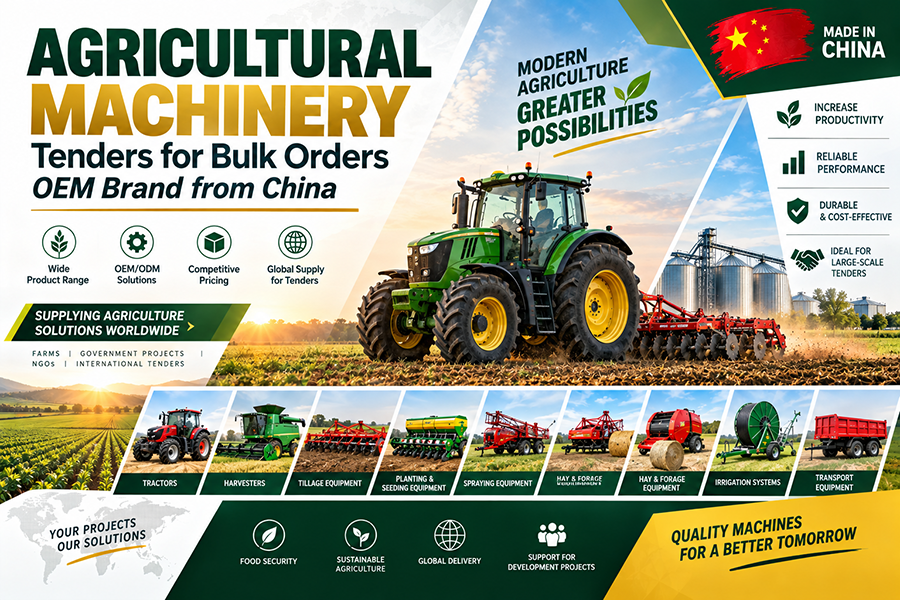
Agricultural machinery reaches buyers through a different route from most industrial equipment. A large share of it is bought by ministries of agriculture, by state extension programmes, by cooperative unions and by donor funded projects, and all of those buy through structured tenders with lots. Understanding how a lot is built is most of the work of bidding one well.
Read the lot structure before you read the specification
A single agricultural tender often contains several lots: tractors in one, tillage implements in another, harvesting and threshing in a third, sprayers and plant protection in a fourth. Sometimes a bidder may take one lot; sometimes the tender requires all or nothing. Sometimes the lots are deliberately built so that a single supplier can serve them, and sometimes they are built to spread the award.
This matters commercially. If the lots can be taken separately, a narrow bid on the two lots you can genuinely serve will usually beat a thin bid across all four. If the tender requires the whole package, you need a supplier who can actually cover the whole package from one works, and the consolidation of the shipment becomes part of your price advantage rather than an afterthought.
The spares schedule is where these tenders are decided
Evaluation committees for farm machinery have usually been burned before. Somewhere in their records is a fleet of tractors that stopped within two seasons because nobody could source a hydraulic seal. As a result the spare parts schedule is often weighted heavily, and occasionally it is scored higher than the equipment price itself.
A strong submission gives, for every machine offered:
- A parts list for the first two to three years of operation, itemised and priced.
- The wear items separated out, with an expected replacement interval.
- A statement of which parts are standard sizes obtainable locally and which must come from us.
- A commitment on parts availability, in years, in writing.
We design toward mechanical simplicity for exactly this reason. Equipment going to a district several hours from any dealer should be maintainable by the team that runs it, with parts that can be sourced or fabricated nearby wherever that is possible.
Match the machine to the soil, not to the brochure
Tenders sometimes specify implements in generic terms, and the winning bid is the one that asks about conditions. Tillage equipment for heavy black cotton soil is not the same as for sandy loam. Harvesting equipment for smallholder plots is not the harvester a commercial estate wants. Where the tender leaves room, we will propose the configuration that suits the described conditions and say why, because an evaluator can see the difference between a considered offer and a catalogue extract.
Training and the extension network
Ministry and donor tenders very often carry a training obligation, and it is rarely a formality. The machinery is going to farmers or to cooperative operators who may not have used a powered implement before. Budget for operator training days, maintenance training for the technicians who will support the fleet, and printed material in the working language.
We can supply manuals and control labelling in the language of the destination, and the training plan should appear as its own line in the bid, with days and locations, rather than as a sentence of reassurance.
Documentation for a supply from China
As the manufacturer behind a bidder, we provide the manufacturer authorisation letter naming the tender, the technical datasheets in the format the schedules require, the electrical specification matched to the destination, and the export set: packing list, commercial invoice, certificate of origin, and any inspection certificate the destination requires. Where the tender demands pre shipment inspection by a named agency, we arrange it at the works.
Delivery schedules deserve care. Agricultural tenders are usually tied to a season, and a machine that lands after planting has begun is worth much less than one that lands before it. State the manufacturing lead time and the shipping time separately, and be honest about both. A realistic schedule that is met builds the relationship that wins the next tender.
Consolidating a multi lot award
Where a bidder wins several lots, consolidating them into one shipment normally lowers the landed cost per unit noticeably. Tractors, implements, sprayers and post harvest equipment loaded together from one works means one set of documents, one inspection and one arrival. We will tell you when the arithmetic favours it, and when it does not.
Sending us a tender
Send the full document with the technical schedules and the evaluation criteria attached. Tell us which lots you intend to take and the destination port or the final town. What comes back is a priced, documented response you can submit, with a lead time you can commit to.